01
KNOWING WHEN PORTING ISN'T ENOUGH
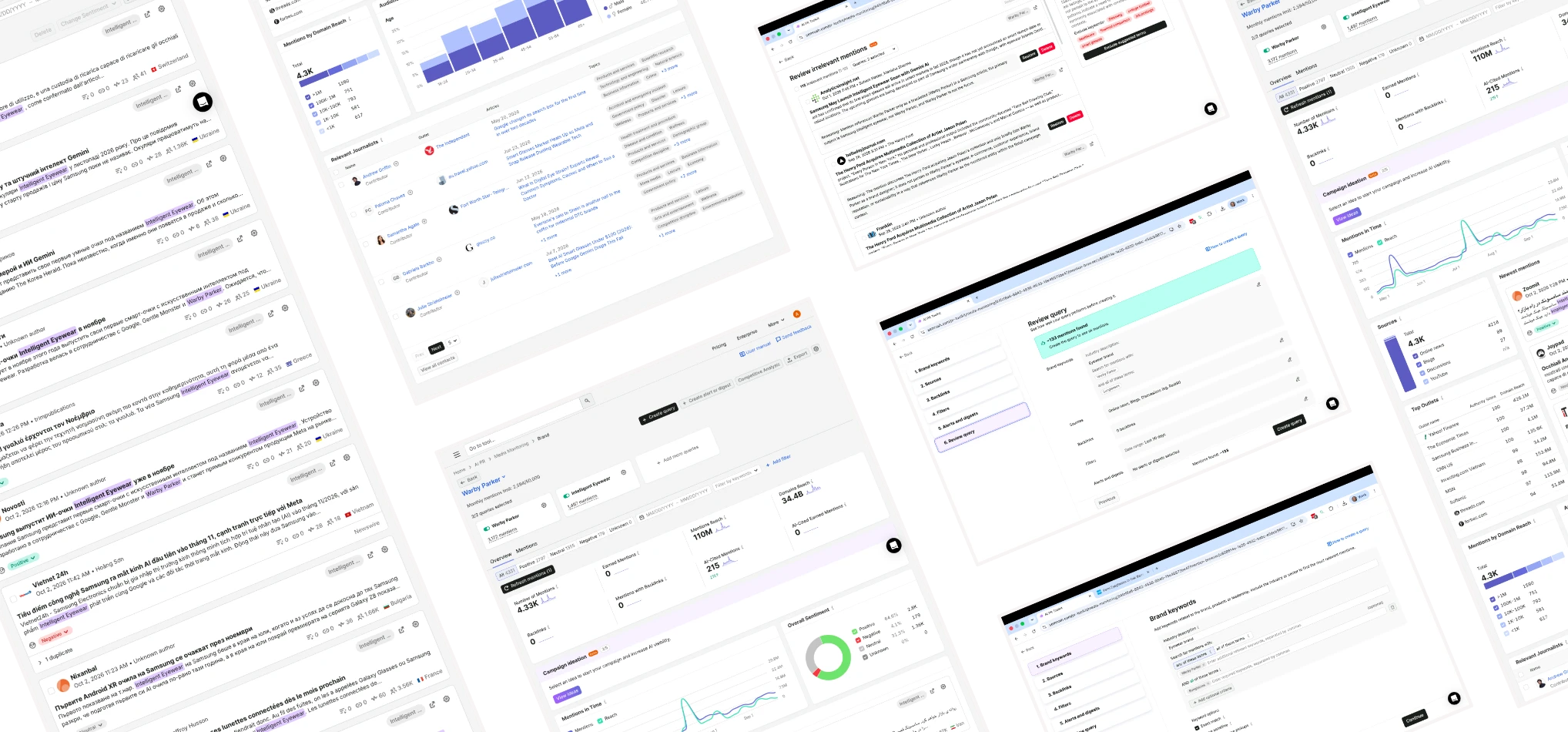
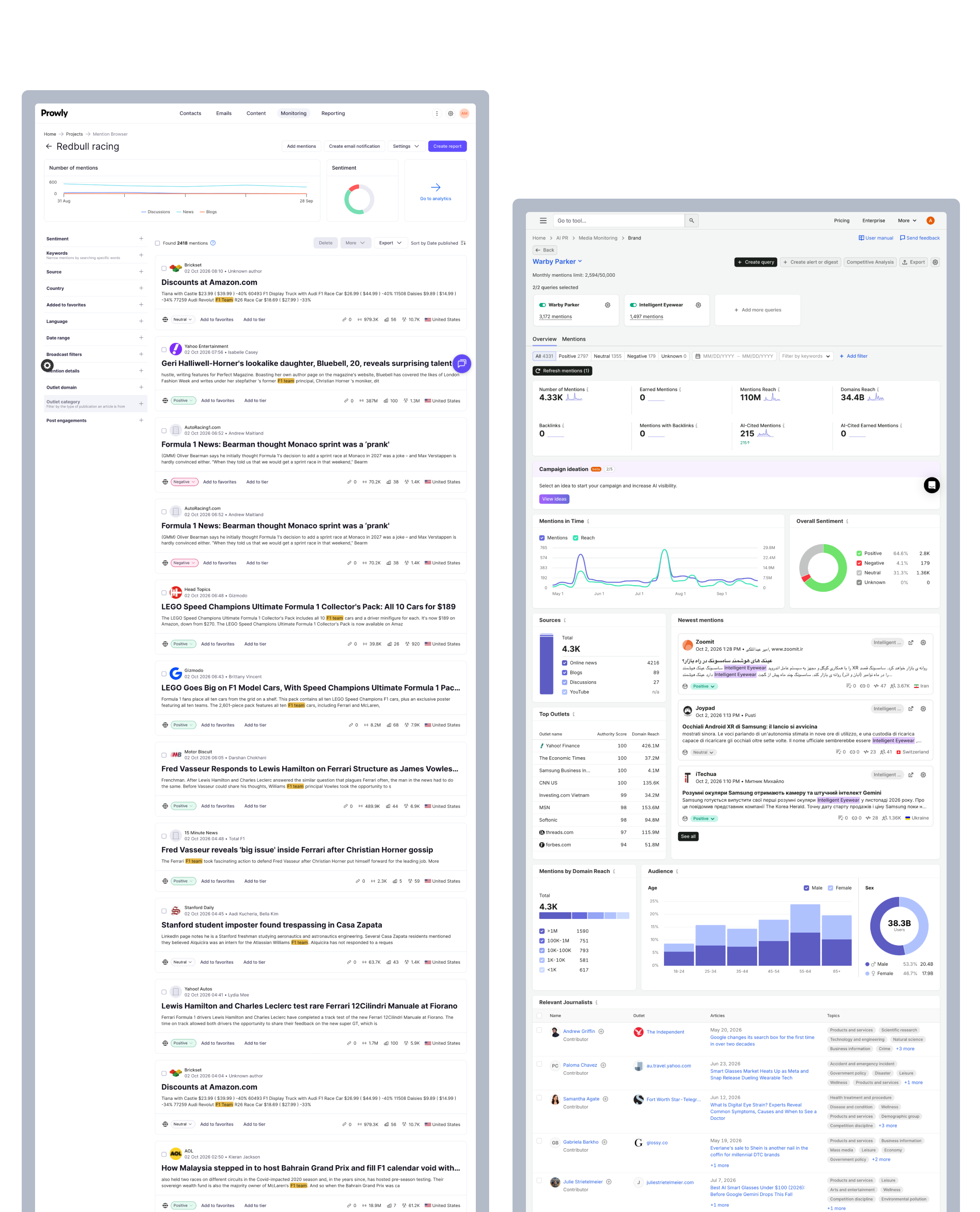
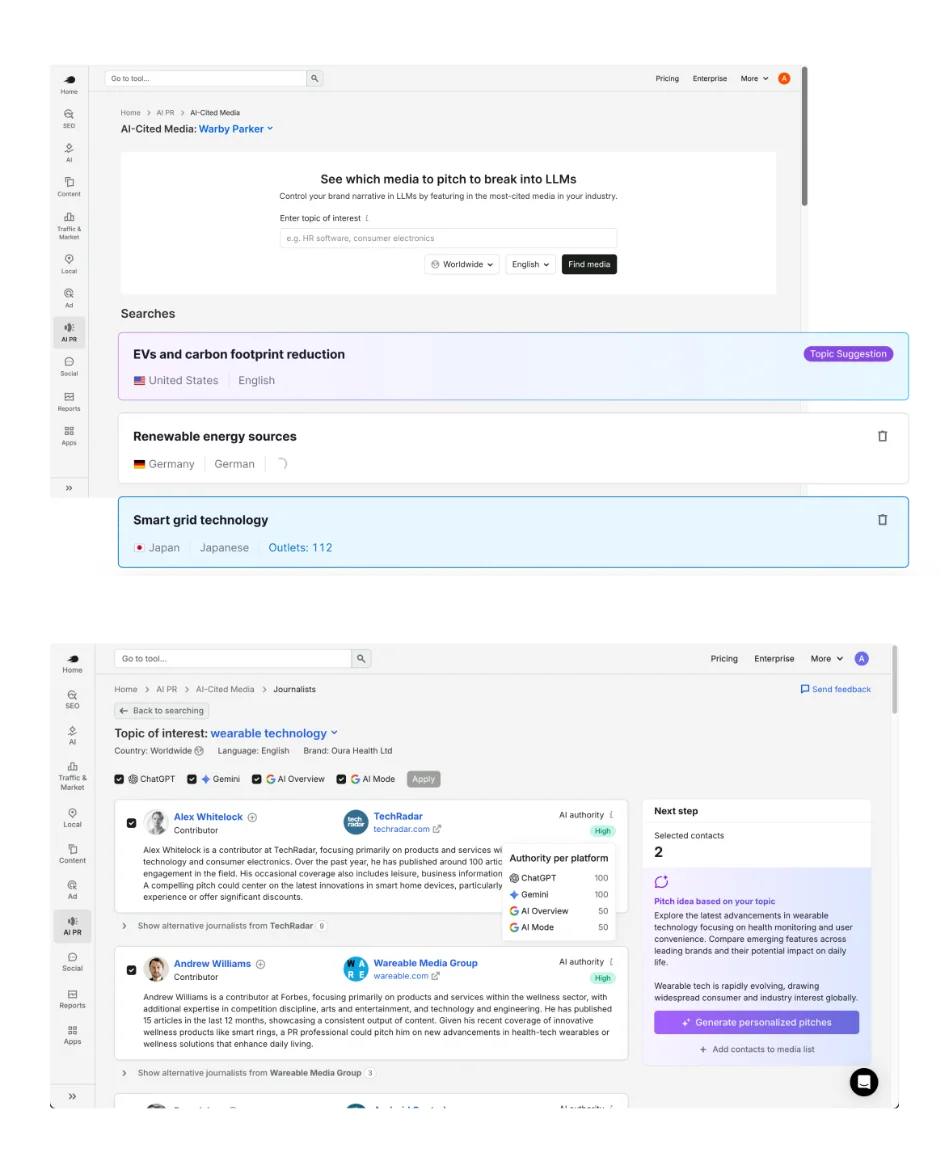
When Media Monitoring moved from Prowly into Semrush's AI PR Toolkit, the easy path was to carry the existing tool over as-is. I pushed for a full redesign instead, treating the migration as a chance to rebuild the experience around what PR teams actually needed rather than what already existed.
02
LISTENING BEFORE BUILDING
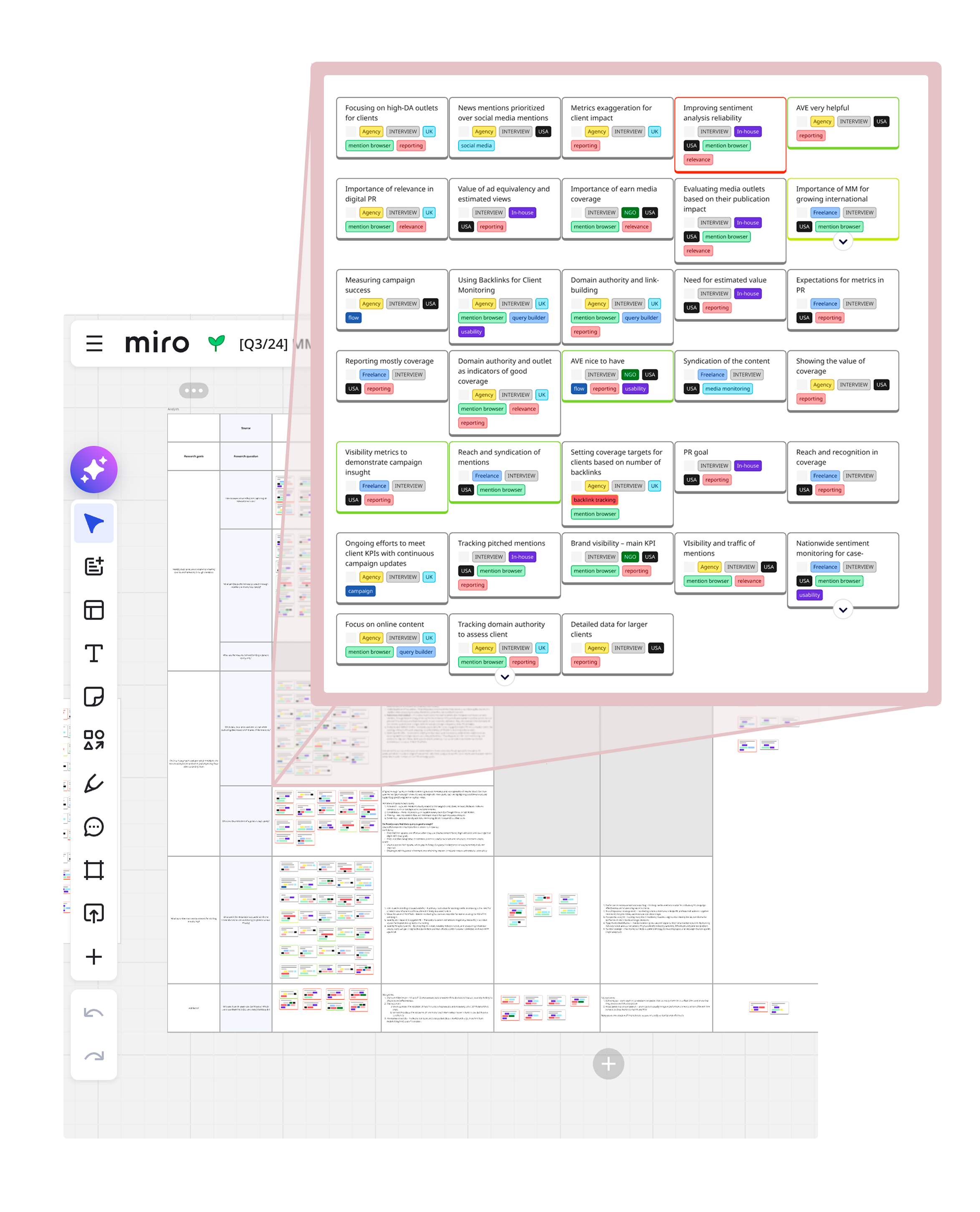
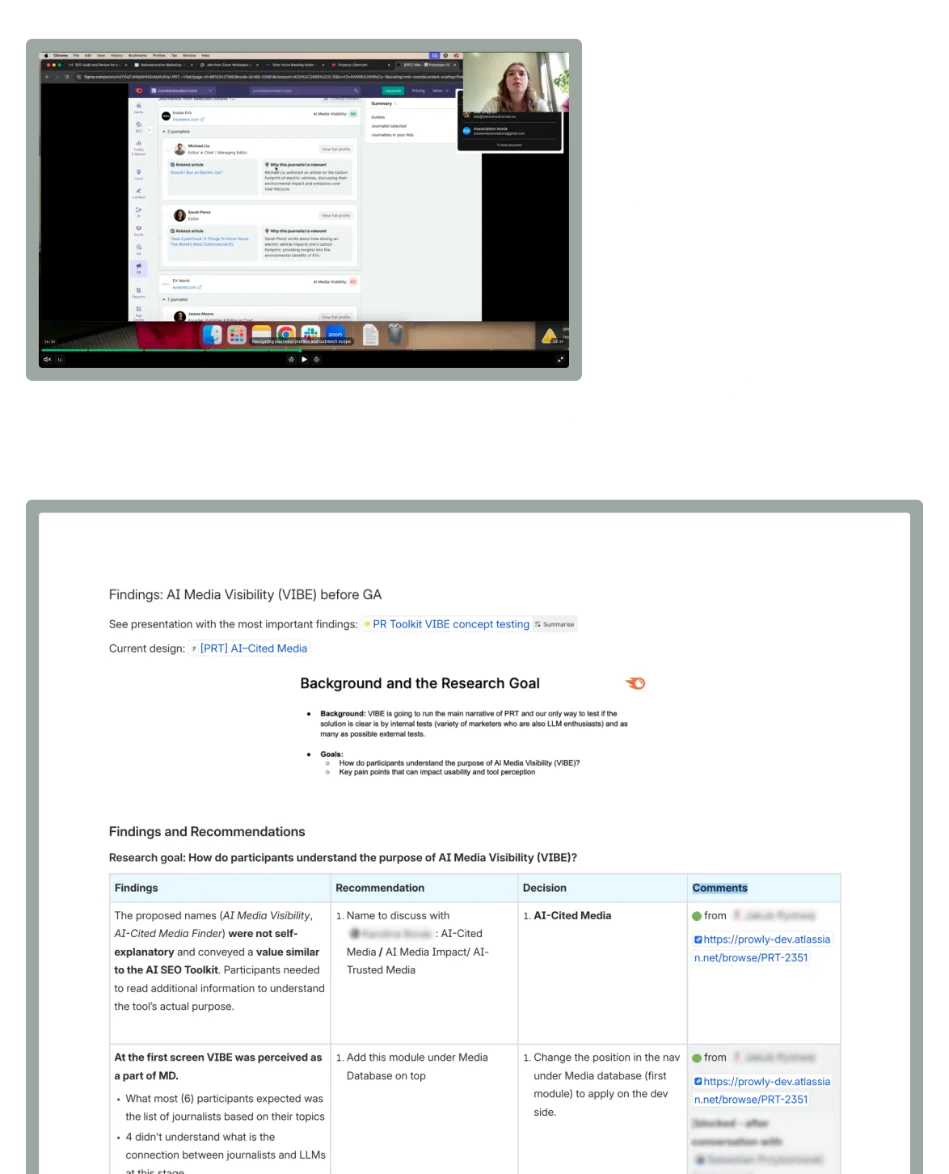
Before changing anything, I audited the existing tool to understand what was working and what wasn't, drawing on direct feedback from the PR specialists and agency users who relied on it every day.
03
Mapping the whole picture
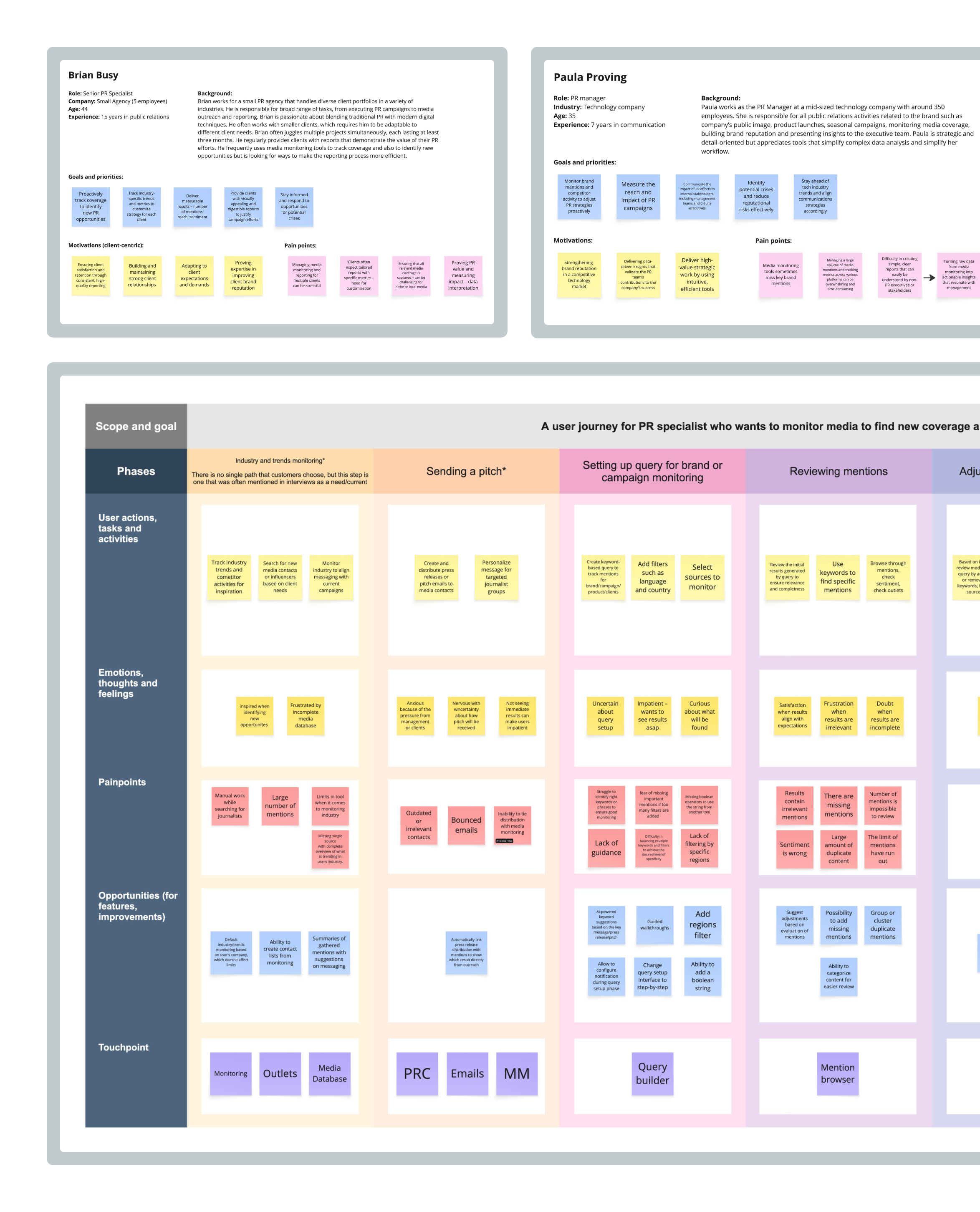
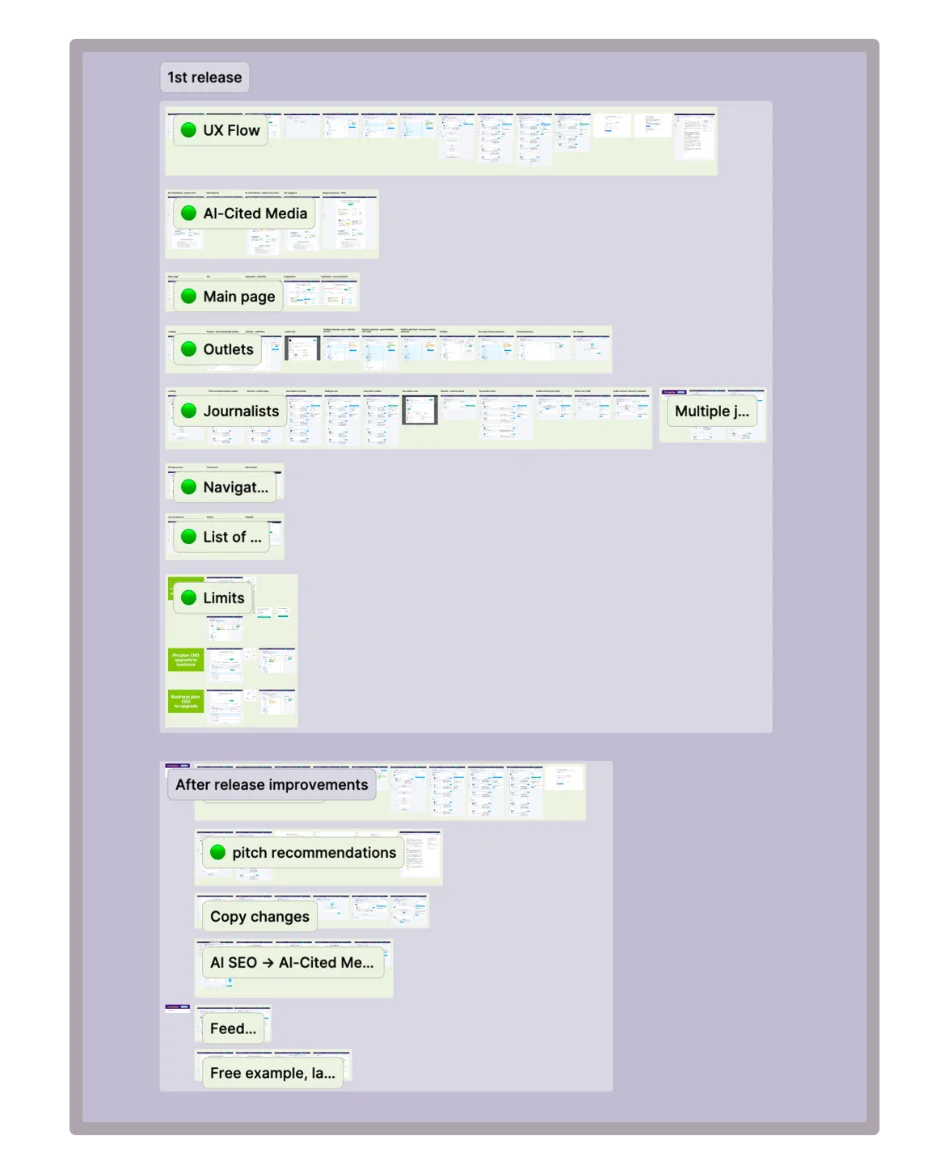
I redefined the core user personas and mapped the end-to-end user journey from spotting a trend to reporting results. A value proposition canvas clarified what the tool needed to deliver, which fed into a new information architecture, new user flows, and a clear list of what to keep from the old tool and what to leave behind.
04
Designing the new version
With the research and structure in place, I designed the new version of Media Monitoring end to end, translating the personas, journey, and information architecture into a redesigned interface.
05
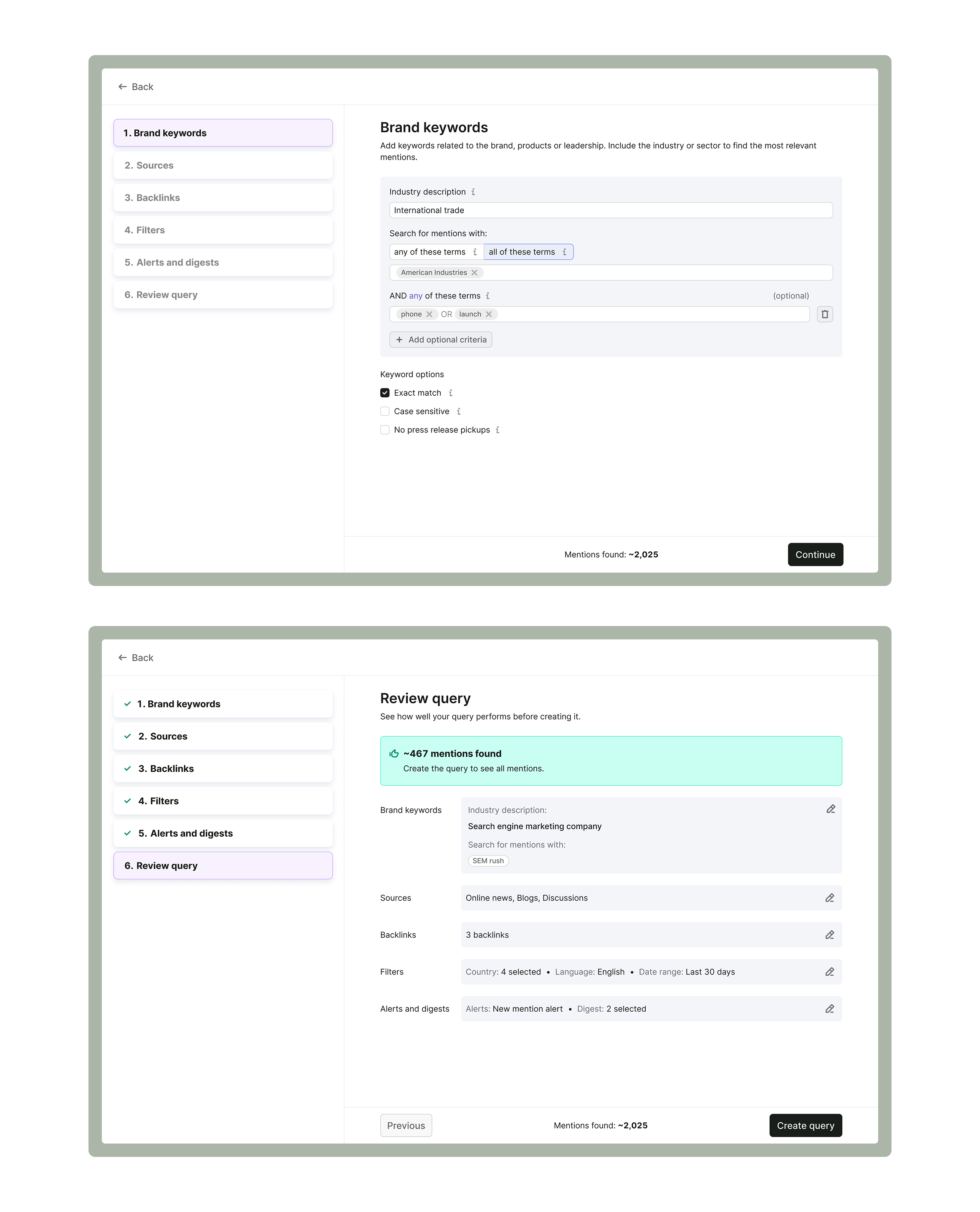
REBUILDING THE QUERY BUILDER
The old query setup was a major source of friction, so I redesigned it into an advanced query builder with simplified boolean search. Query completion rose to 73.3%, up from 48.7% in the previous Prowly-based version.
06
TURNING DATA INTO SOMETHING SHAREABLE
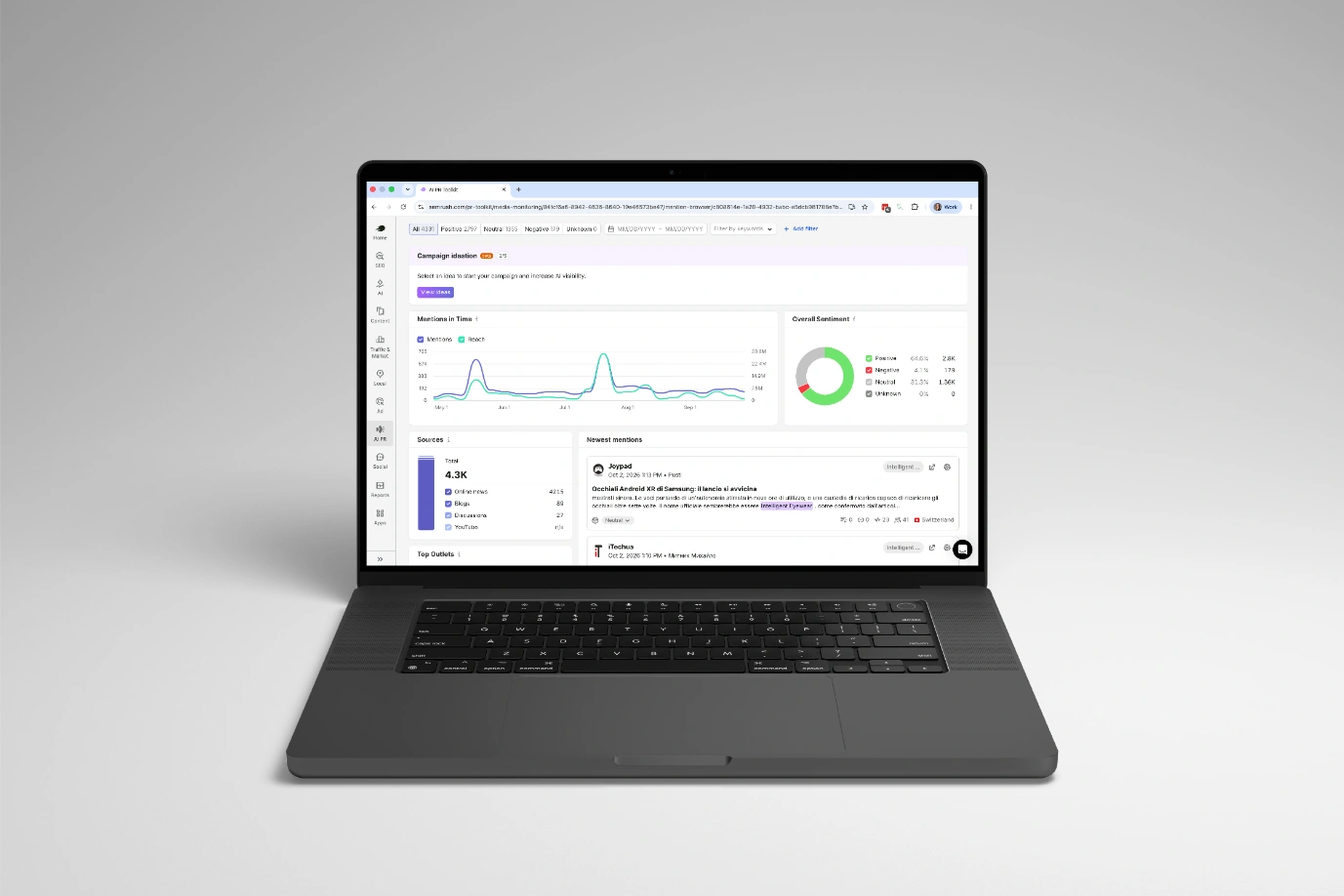
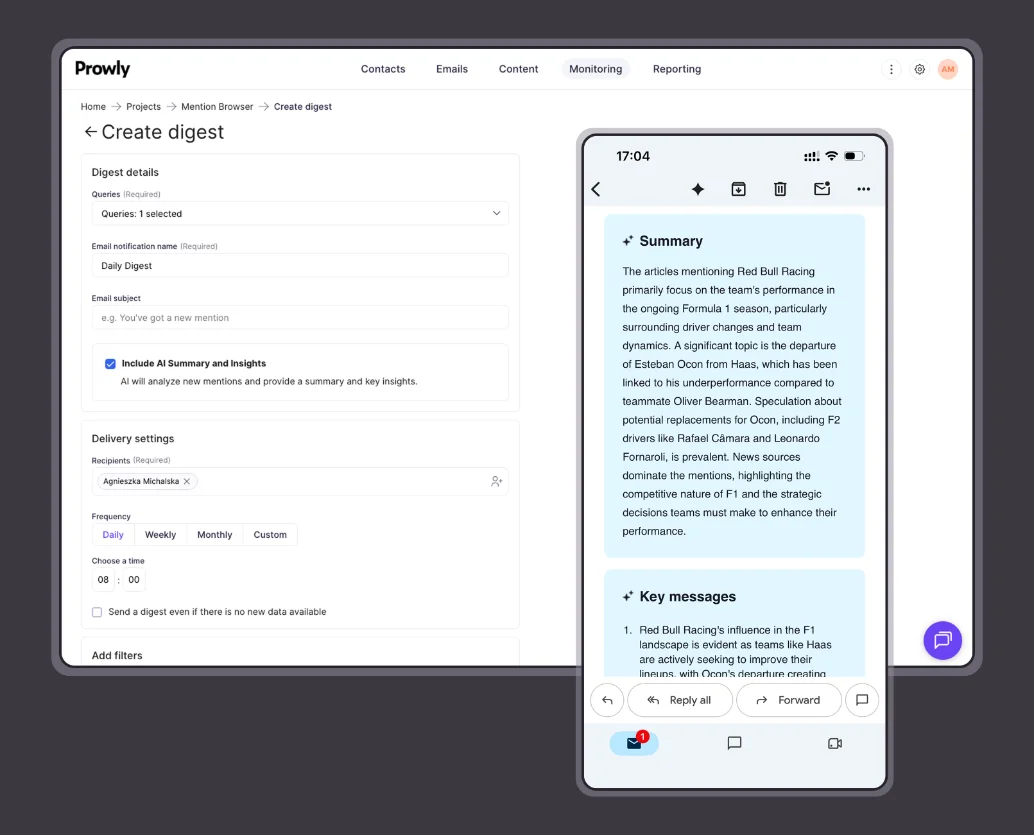
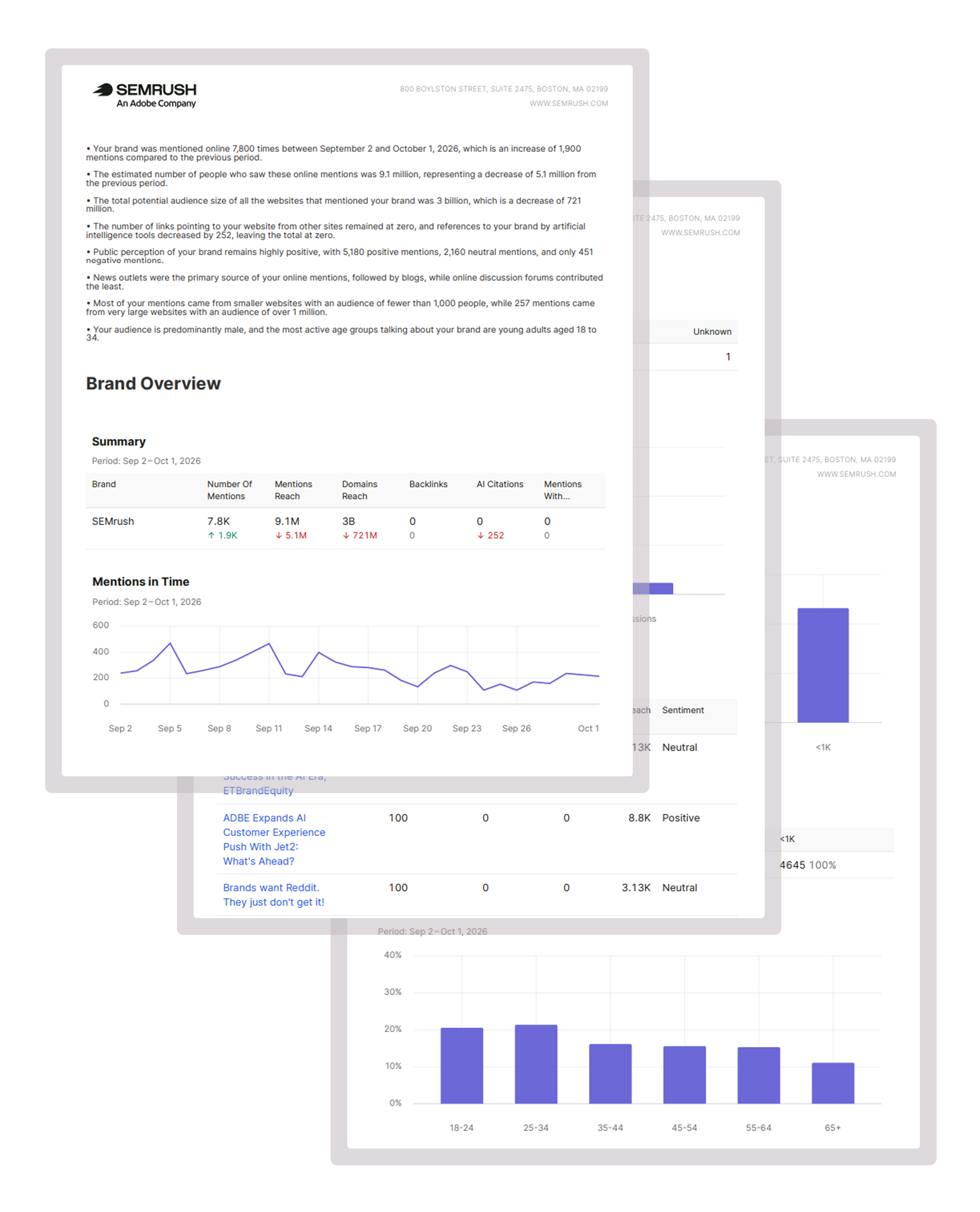
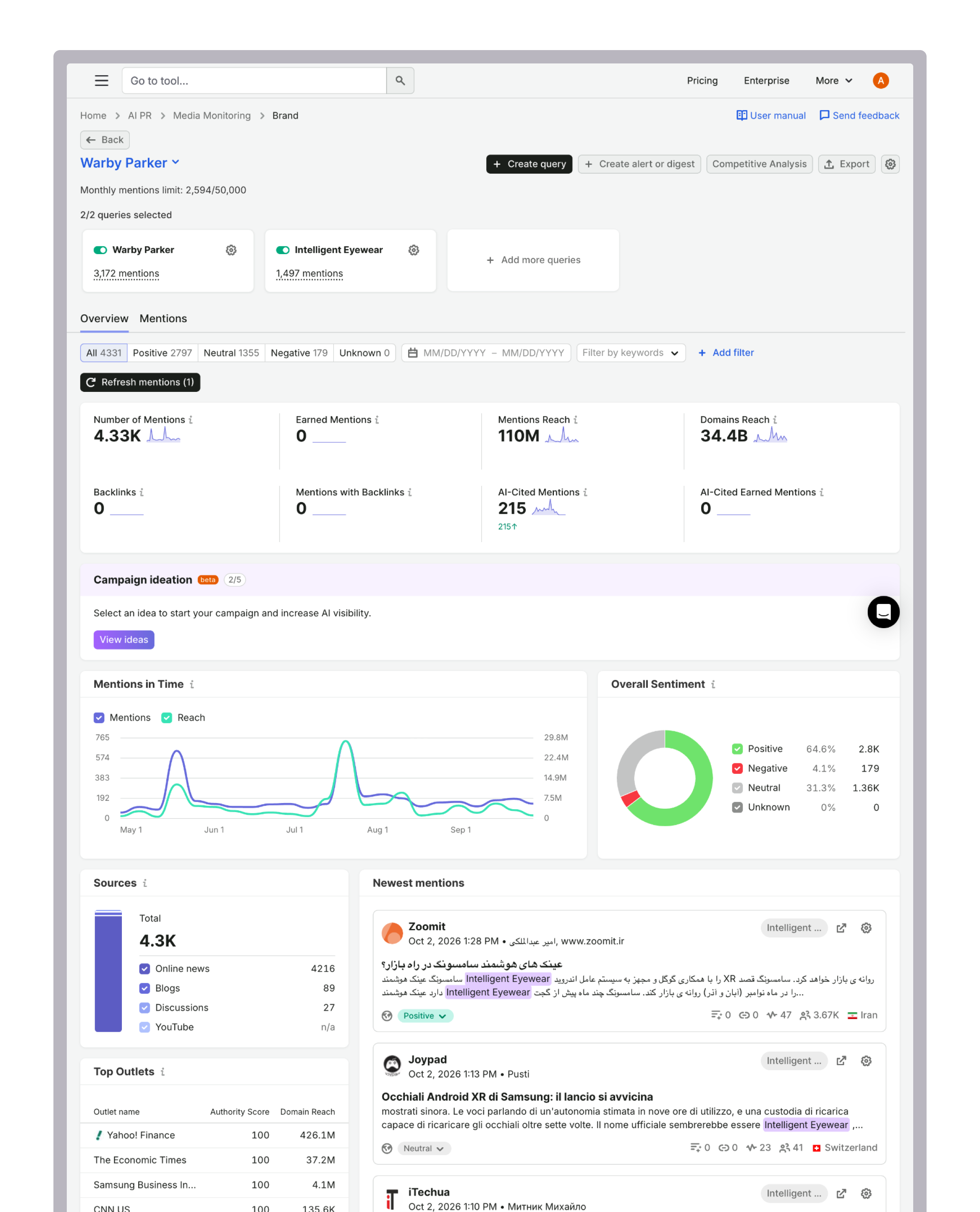
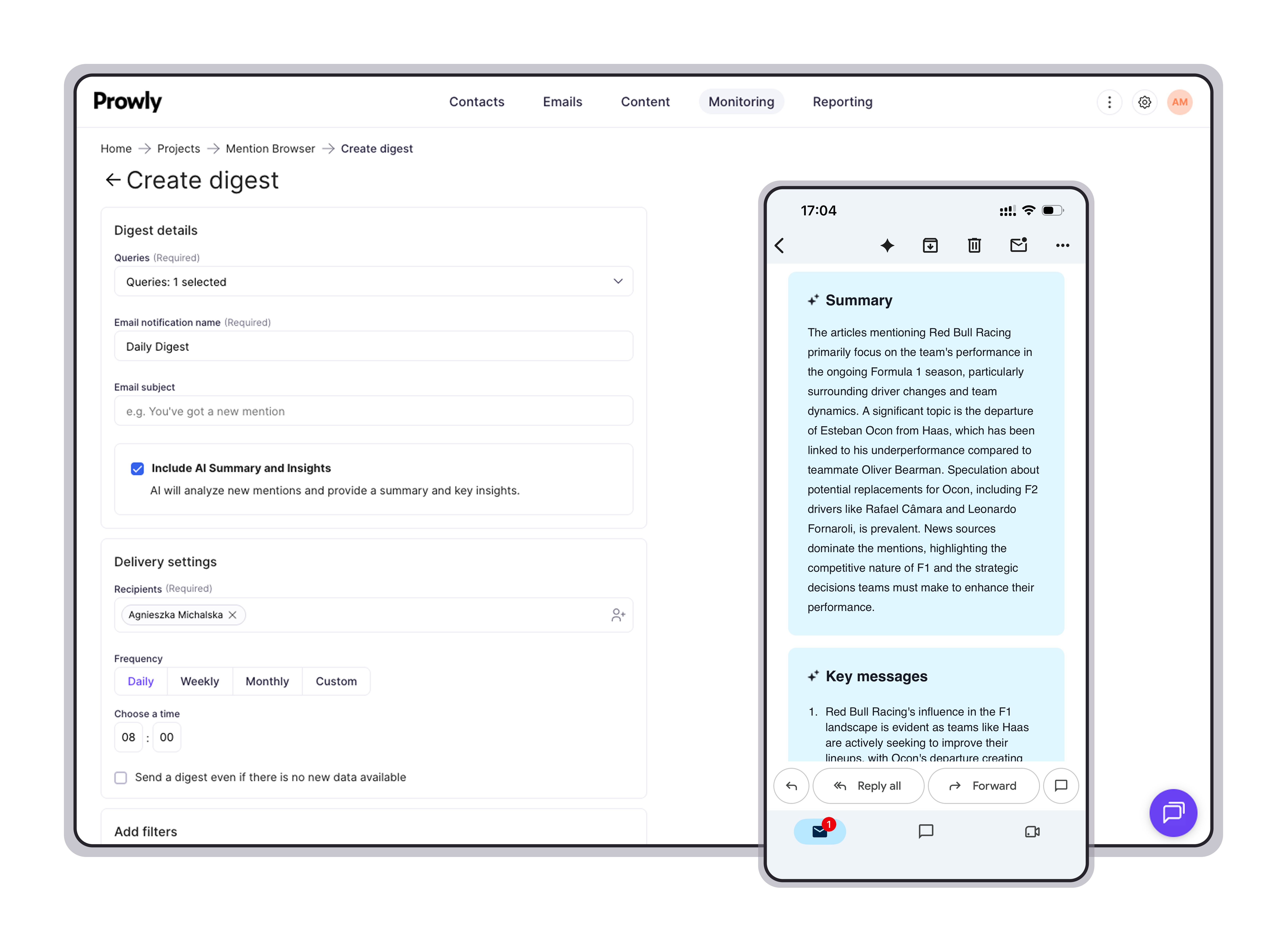
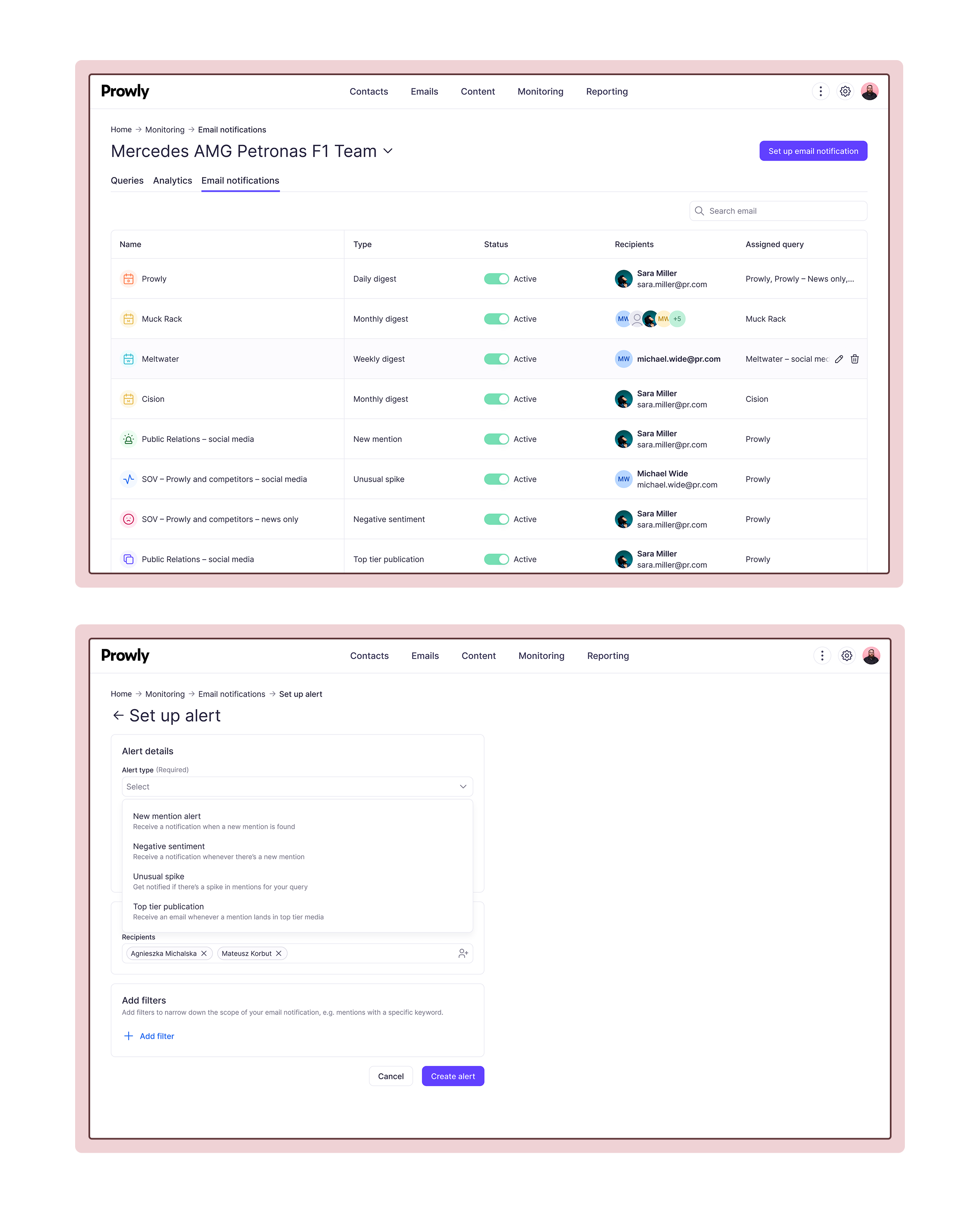
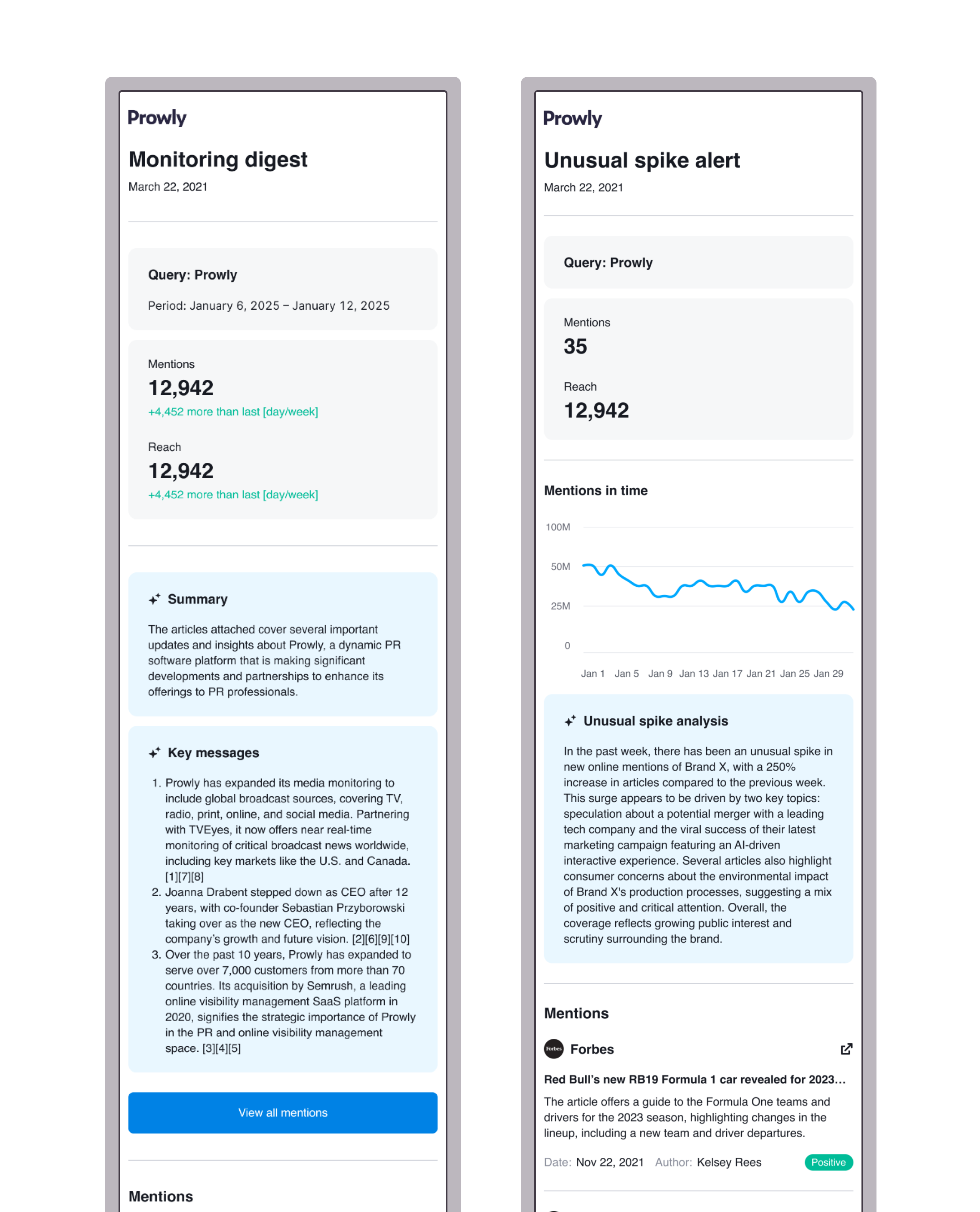
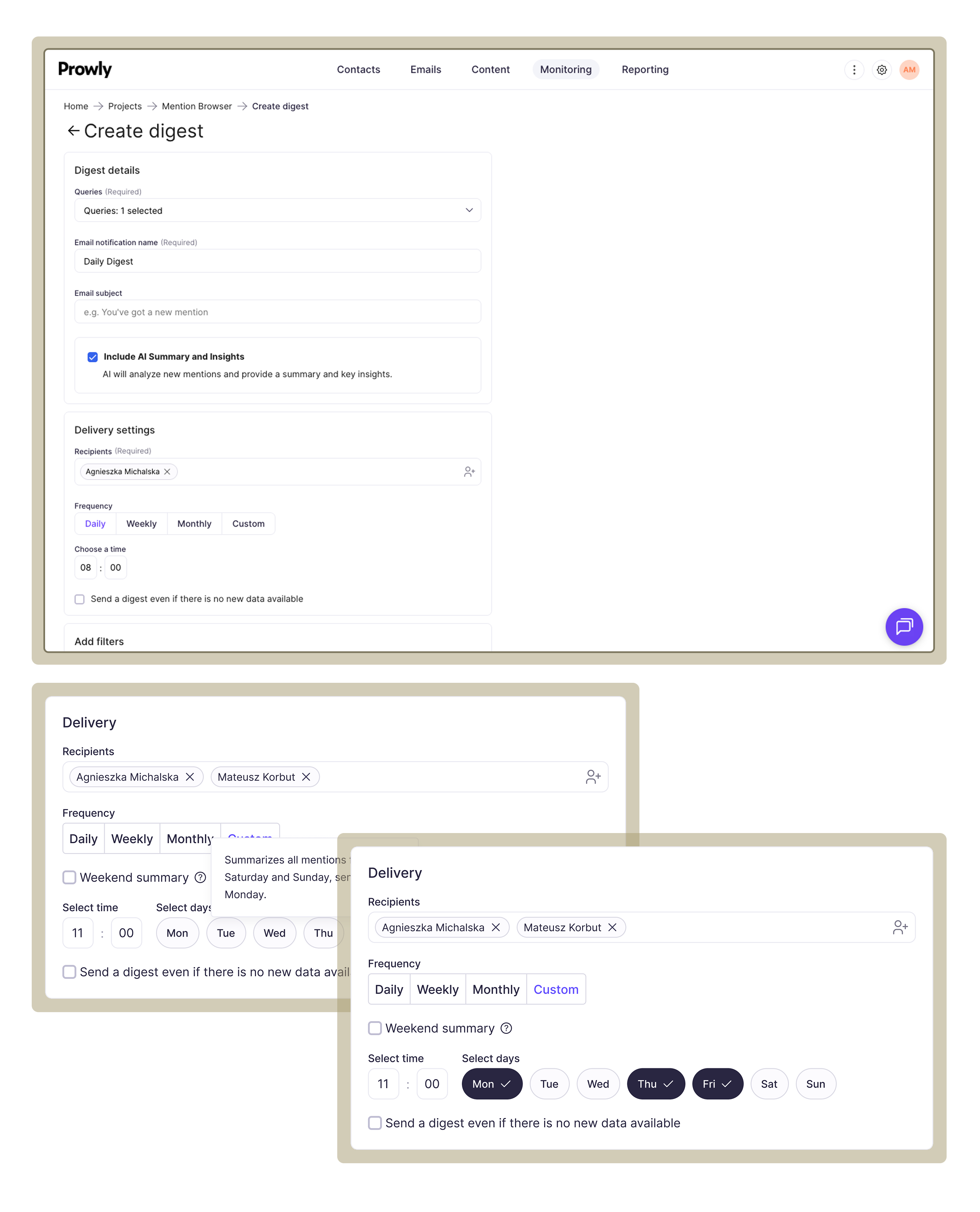
I moved key metrics onto the first page so teams see their results immediately, with individual mentions organized into their own tab. Alongside this, I built easy reporting so PR teams can share metrics and mentions with stakeholders without manual work.
07
EXTENDING THE LOOP: FROM MONITORING TO CAMPAIGN IDEATION
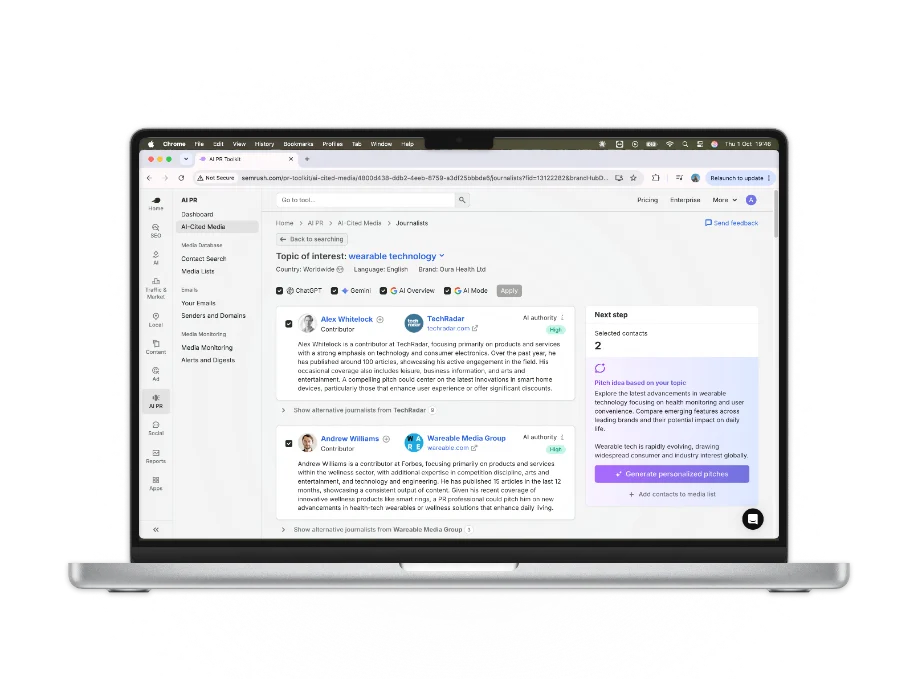
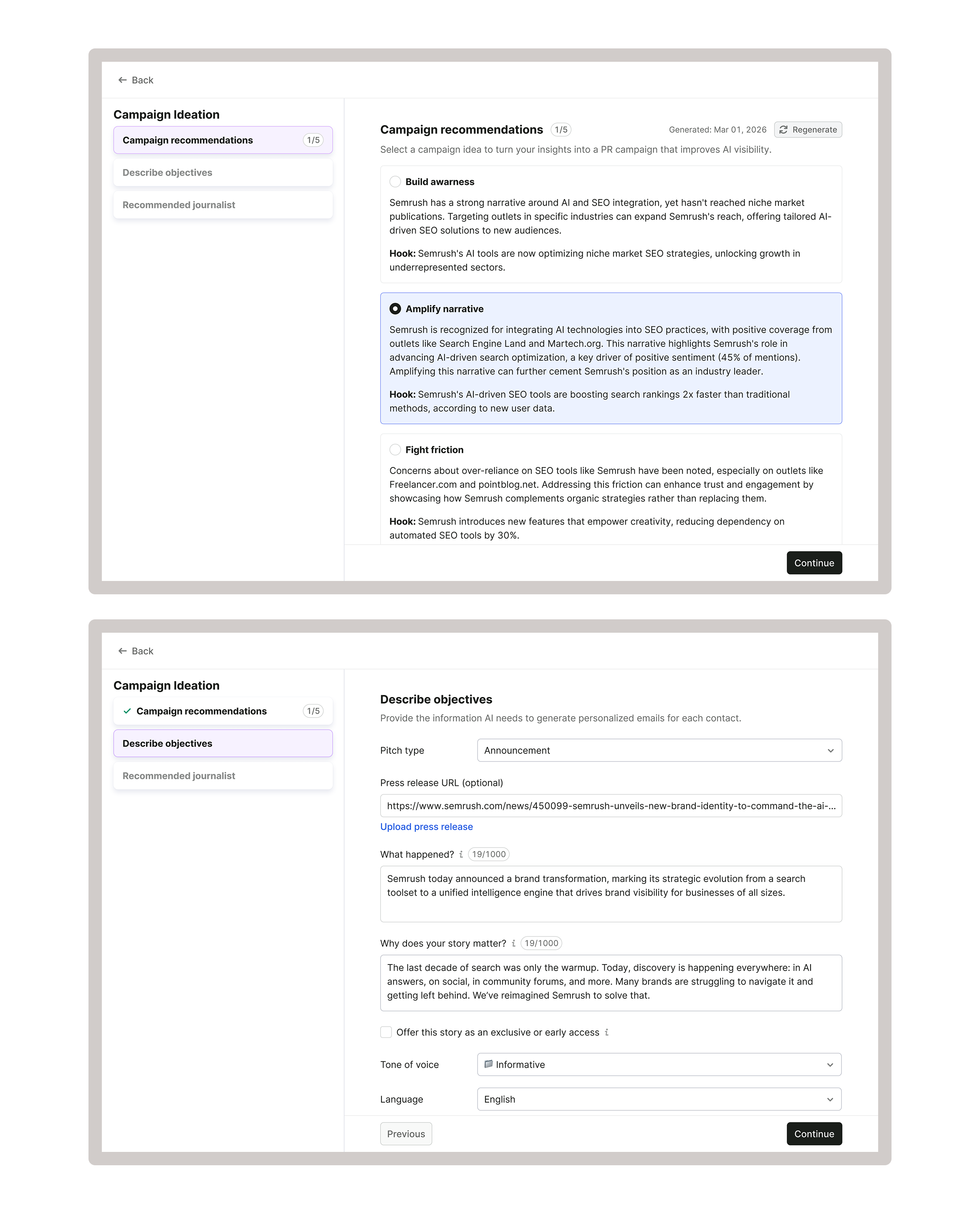
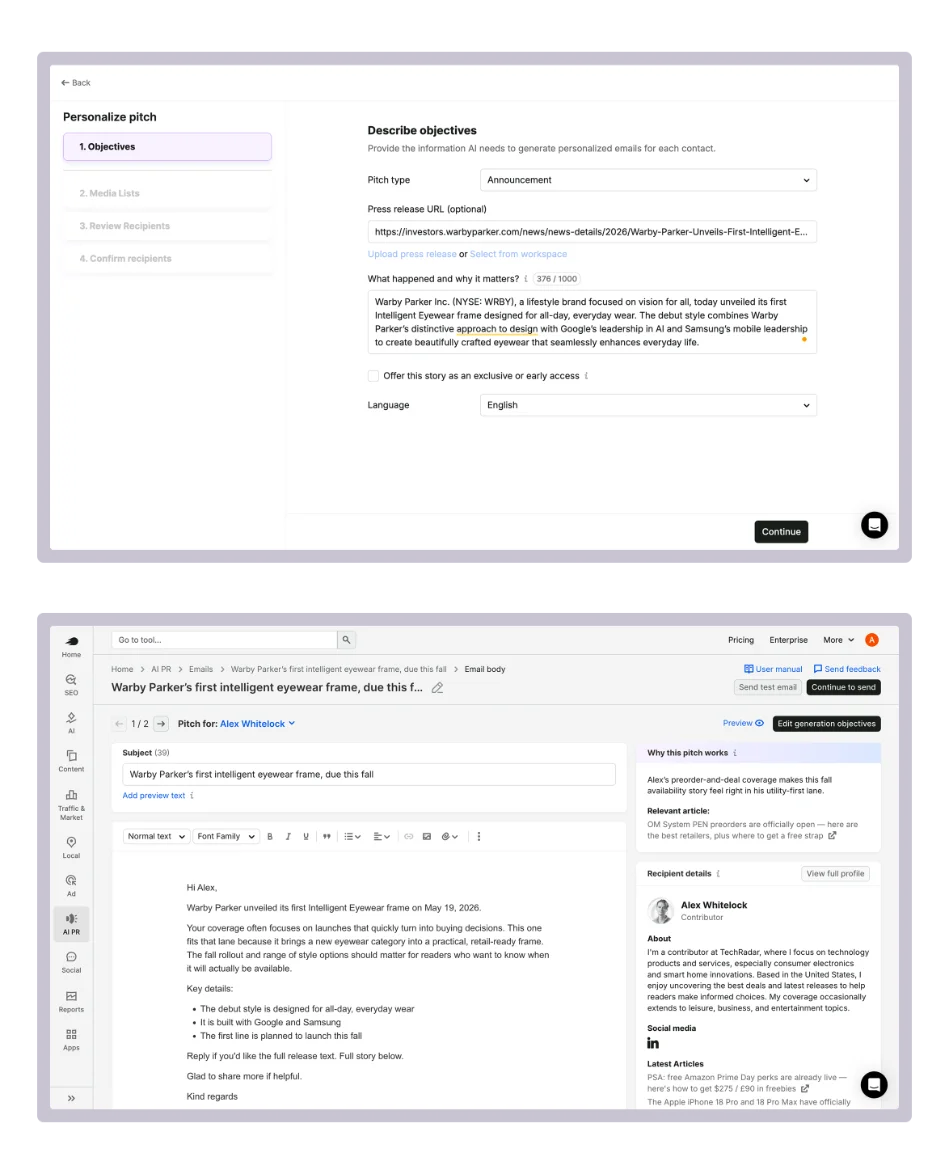
Monitoring data doesn't just surface what's happening, it points to what to do next. I built a feature that turns tracked mentions and trends directly into campaign ideation: PR teams can generate campaign recommendation cards straight from their monitoring data, each one pairing a story angle with the media targets most likely to cover it and the supporting assets needed to pitch it. Teams can start from a trend they've spotted and get matched campaign ideas, or start from a campaign goal and get matched coverage opportunities. Once a campaign is underway, the same loop tracks goals and results against the original recommendation, closing the gap between watching the market and acting on it.
08
RESULTS
The redesign turned Media Monitoring from a tool PR teams tolerated into one built around how they actually work: a faster, clearer query builder that lifted completion rates from 48.7% to 73.3%, metrics and mentions that no longer require digging, and reporting that takes seconds instead of manual compilation. Users who engage with it retain at more than 3x the rate of those who don't, and it's compelling enough that almost 60% of users on its plan tier chose that plan specifically to get access to it.